- Dividends & Downtime
- Posts
- Last week of January - Grind Season in Imminent
Last week of January - Grind Season in Imminent
The semester is a quarter through. Get to work!

Xander Melrose
January 29, 2024
Happy Monday!

Read Time: 6 Minutes
It’s the last week of January, and we are more than a quarter into the semester! (OMG) Today, we will go over some generic market updates, talk a bit more about mental strength, and go over some events for the week!
In this week’s rundown:
Willpower - How you can increase your tenacity
An update on phone usage (Yes, we committed to it)
Real Estate - An intro to the BC registration system
Our apartment pick of the week (For all the subletters)
Career Compass
Market Changes

Good Morning! It’s the last week of January, so those New Year’s hangovers should be almost gone by now. Here’s the latest:
Markets: The S&P 500 had a great week, with tech stocks pulling that line upwards until Friday, when it ended with a slight dip. Bitcoin also had quite a week in cryptocurrency, with a coin price just edging over $42,000 mid-day yesterday. If you read our post from two weeks ago, we talked about how Bitcoin ETFs had gotten approved by the SEC. Well, as of Thursday, BlackRock’s Bitcoin ETF cleared an AUM (assets under management) of $2 Billion or nearly 50,000 coins. January was a good month for passive investors as most mutual funds and growth indexes steadily rose. Day Traders, however, had to deal with a lot of volatility, especially in the tech space.
Intel: After quarterly forecasts came out from Intel, the world’s largest chipmaker saw a 12% drop in share price. Analysts forecasted investor returns to be 33 cents per share but the share price slump occurred after forecasts by the company were only at 13 cents per share.
“Loud-Budgeting”: Because no one in our generation gets any information from anything besides TikTok and Dividends & Downtime, finance TikTok trends are starting to blow up. Loud Budgeting is pretty much what it sounds like - being public and transparent about your finances. Many creators, such as Dave Ramsey, @penniestopounds, and @ThisGirlTalksMoney, are all great resources to learn about finance while feeding your scrolling addiction.
Biden’s Phone Scam: If you guys read last week’s edition, you learned about Elevenlabs, the AI Company that is perfecting human voice replication. After a massive Series B valuation, their company was at the forefront of AI news. This week, there were reports from voters claiming AI-generated phone calls impersonating Joe Biden were being detected across the state.
OpenAI Robot?: The startup 1X Robotics Open AI invested 23.5 million into and is currently spearheading Android development working with the Open AI platform. NEO, its primary project, is an android developed to help humans in the labor force. It’s a 1.65-meter tall robot that can carry around 20 kilograms for about 2-4 hours. Let's see where this product and company take the Android space to.
TOPIC TWO: Jobs?

Looking for a job this summer? It’s not too late. Here are some of our favourites that are still open!
Internship Pick of the Week

This program is designed to help students understand and explore different career opportunities in Finance and help them land internships in 2025. Accepted Applicants will be paired with professionals and assigned a mentor for either commercial banking or capital banking. The capital markets training program is designed for students with a passion for IB and provides them with core technical skills to help them thrive in finance. Students are provided with a combination of online resources and training sessions led by an instructor in modelling, valuation, Excel, and finance-related accounting. This program is from May 2024 to October 2024.
No pay - it is a mentorship program (lame)
Apply by Feb 4
Eligibility criteria for both programs: UBC Sauder degree students currently in Year 2, Year 3, and Co-op, AND who will be returning to full-time studies in September 2025
Academic Alley
Screen Time - Update
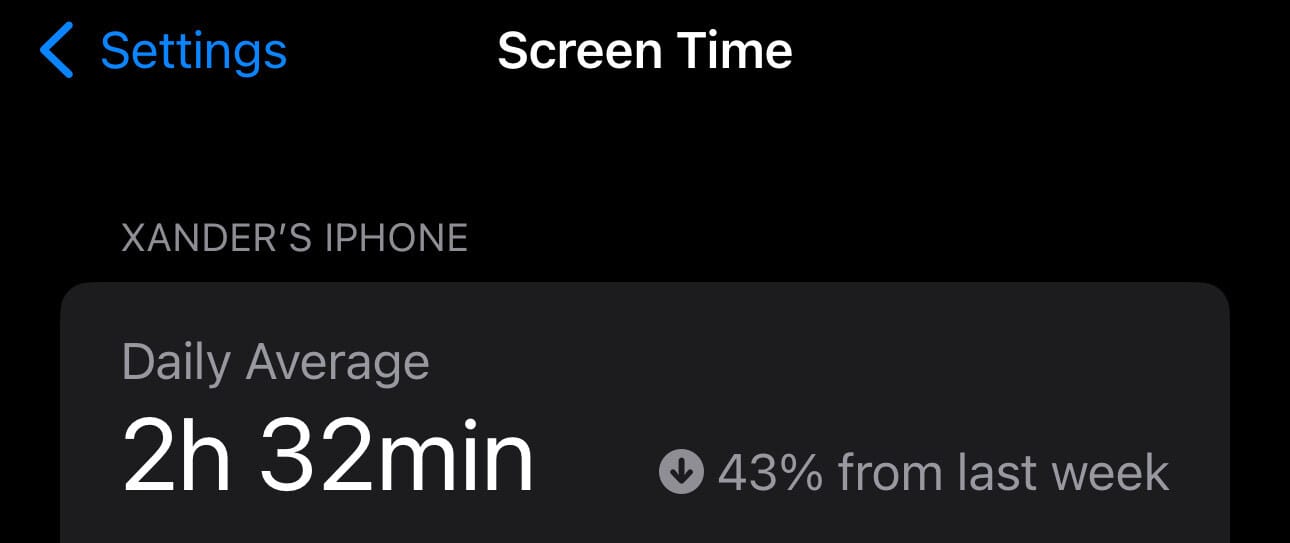
It’s officially been two weeks since this post - Where I stated I wanted to reduce my screen time and be a bit more meaningful with my time. Two weeks have passed, and I officially have the update I know you have all been waiting for. I have cut my screen time by more than half.
On January 15th, I sat at an average of nearly 8 hours daily. As I write this, I have cut my daily usage to under three hours. In case you missed that article, here’s a summary of my most effective steps and the changes I’ve noticed in my day-to-day life.
Greyscale Filter - I would say that this was one of the more effective changes I made to my routine. The reduction in visual stimulus was beneficial in overcoming one of my biggest adversaries in reducing phone usage - Instagram Reels. Reels lost nearly all of its appeal without the exciting colours to entice me, and I have completely cut it out of my daily routine.
Removing Apps from Home Screen & Tap to Wake: For me, both of these were useless. The tap to wake took me a few days to get used to, but inevitably, I’ve just become accustomed to clicking my lock button to wake my phone up. I ran into the same issue with removing apps from my home screen. Even though they weren’t there to prompt me, I would just open my phone and immediately open spotlight search to access them. Overall, these two changes added to the overall effort to reduce my usage but were not that useful individually.
Not using my phone while Traversing: This is one of my best daily routine changes. The best part?? - It’s so goddamn simple. I’ve stopped using my phone while walking around. Walking to class, down the hall, to the library, or even to the bathroom, I don’t take out my phone. It either stays in my pocket or I leave it behind. If I had to recommend one tip to someone trying to reduce their screen time, this would be it. I’ve already gotten used to such a simple change in less than two weeks.
I’ve had a really good time trying out this experiment over the past two weeks. I have more time available to both work and relax comfortably, as I don't have hours being carved out of my day. I am going to continue to make changes, and I am looking forward to what the future holds.
Willpower & Tenacity

Last week, we talked about habit-building and how you can change your routine. However, changing isn’t always easy, and willpower plays a large part in pushing yourself to improve.
Willpower: More Than Just a Habit
Unlike habitual actions requiring minimal conscious effort, willpower demands a significant intervention in our default neural processes. It's about actively resisting certain behaviours or thoughts, often requiring considerable effort and energy. This distinction is important in understanding why sometimes it's so challenging to stick to our goals, whether in studies, finance, or personal health.
The Finite Resource Theory of Willpower
The idea that willpower is a limited resource is primarily derived from the work of social psychologist Roy Baumeister and colleagues. They proposed the theory of "ego depletion," suggesting that willpower is like a muscle that gets tired with overuse. In their experiments, they observed that when participants used their willpower in one task, they had less available for subsequent tasks. This led to the hypothesis that willpower diminishes with use over a period.
Andrew Huberman's Perspective: In the Huberman Lab podcast, Huberman discusses this theory and acknowledges its influence on our understanding of willpower. However, he also points out that this view is controversial and subject to debate. Huberman explains that while the idea of ego depletion gained popularity, subsequent studies have provided mixed results, with some researchers unable to replicate Baumeister's findings.
Although willpower may have limits, Huberman seems to believe it's not strictly a finite resource that gets depleted like a battery. He suggests that other factors, such as beliefs about willpower, sleep, stress, and overall health, play significant roles in determining how to muster and sustain willpower over time.
David Goggins' Stance: Goggins, known for his ultra-endurance feats and mental toughness, offers a perspective that aligns more with the idea of willpower being a trainable and expandable capacity rather than a strictly limited resource. Goggins' approach to mental resilience and tenacity emphasizes pushing beyond perceived limits, suggesting that the boundaries of willpower are often self-imposed. Goggins advocates for a mindset that sees willpower as something that can be strengthened through challenges and adversity.
The Anterior Mid-Cingulate Cortex: The Willpower Hub
Huberman introduces us to the anterior mid-cingulate cortex (aMCC), a key brain area in generating tenacity and willpower. This region integrates information from various neural circuits, playing a central role in allocating mental and physical resources for specific activities. Interestingly, activities that require effort and resistance can increase the activity and size of this area, as observed in 'super-agers,' suggesting that willpower can be strengthened through practice.
Practical Tools for Enhancing Willpower and Tenacity
Huberman suggests a couple of ways to enhance willpower and tenacity:
Engaging in Cardiovascular Exercise: Regular moderate-intensity cardiovascular training can increase the volume of the aMCC, enhancing willpower.
Incorporating 'Micro Sucks': Activities that require effort and resistance, even if they're small or brief, can help build up our willpower capacity.
Balancing Challenge and Safety: While it's important to challenge ourselves, maintaining psychological and physical safety is paramount.
STUDENT LIFE
Real Estate Run-Down

Only a few days left in January, and midterms are approaching fast. BCREA (British Columbia Real Estate Association) released their First Quarter Housing Forecast and predicted a substantial market rebound as the Bank of Canada is set to lower its policy rates this year. Lots of transactions will be happening in 2024, and it's the perfect time to understand how one establishes their authority over their property.
Ownership of Land - Estates
How does one prove their land ownership? First and foremost, except for parks, aboriginal land treaties, and military bases, the Crown owns EVERYTHING. In Canada, there are multiple "estates", which is a right to use, live, and operate upon land.
Fee Simple Estate: This is the highest bundle of rights one can have on land. Your grandparent’s small home they bought 60 years ago? They likely have a fee for simple ownership. Your name will appear at the Land Title Office under "Registered Owner in Fee Simple"”
Leasehold Estate: Leases grant the leaseholder a right to use, live, and operate on the land according to the contract terms, essentially an estate in that land. One thing to note: Leases shorter than three years will not appear on the title. Say you're looking to buy a house to live in, and your realtor fails to notify you that the current owner has granted a Leasehold Estate. You may be unable to immediately move in, which is the result of the Residential Tenancy Act (which protects tenants from various situations).
Life Estate / Pur Autre Vie: These estates depend upon a person's life. With Life Estates, someone can maintain a Life Estate for their own life. Remember that they are not the Registered Owner but appear as a claim/note on the title (a charge). Pur Autre Vie grants someone temporary ownership of land based on someone else's life. Neither of these are used often, as placing ownership rights in someone's life is risky.
Joey’s Pick of The Week

3026 W 21st Ave, Vancouver, BC V6L 1L1
5 bed
2.5 bath
2,510 sqft
$6000
Have you ever dreamed of starting your own party house with a group of 5 friends? For the reasonable monthly rent of $6000, this house offers you two levels of space, perfect for creating the ideal Mojo Dojo Casa House. Right in the heart of Arbutus, this property is only a short 25-minute bus from campus, as well as walking distance from Valdez and Carnarvon Park.
Social Ledger: Get Sipping

If you don’t have any plans this weekend, don't worry. We have you covered! Weekend nights at Moulin Rouge are always a guaranteed success with $3.47 Tequila shots. This is an excellent pre-game spot, especially since it’s hard to enjoy a night in Vancouver without breaking your bank. Show up anytime between 3pm and 2am for the cheap drink deals and head to a club to end the night.
TLDR;
Who? → Anyone and everyone
What? → Cheap drinks
When? → 3pm through 2am
Where? → 998 Granville Street
Why? → Its February soon
How? (much) → Free to enter, cheap to drink
Social Ledger: Not-Sipping
This week, on February 1st, the UBC Accounting Club will host a 1st and 2nd year night! The event is geared towards the younger Sauder students looking to gain more information regarding a specialization in accounting. They will be bringing in tenured professors and a few Big 4 Campus Ambassadors, aiming to give students industry insights on career paths, recruitment, networking in accounting, auditing, and tax service lines. The night will go from 6-8pm, at Sauder in room HA 491. Make sure to buy your tickets ($5 for non-members, free for members) by January 31st at 11:59 pm.
TLDR;
Who? → 1st & 2nd year business students looking to specialize in accounting
What? → Career advice for potential accountants
When? → Friday, Jan 12
Where? → HA491, Sauder School of Business
Why? → Learning opportunity!!
How? (much) → $5
WRAPPING UP
Andddddd we’re done!!
Thank you guys for reading yet another episode, and we are so glad to have you here. We hope you have a fantastic rest of your week, and please feel free to contact us with any suggestions you have!